REVIEW · VENICE
Venice Walking Tour and Doge’s Palace Guided Visit
Book on GetYourGuide →Operated by Venetoinside - Insidecom · Bookable on GetYourGuide
Venice has a way of pulling you in fast—then slowing you down in marble and myth. This Venice Walking Tour and Doge’s Palace guided visit gives you a smart mix: a guided stroll through the city’s key squares and streets, followed by a tour inside the political heart of the Venetian Republic at Doge’s Palace. I like that the walk isn’t just photos; you get a guided thread through places like Santa Maria Formosa, Campo Santi Giovanni e Paolo, and the Mercerie. I also like the payoff inside, with focused access to rooms you’d otherwise rush past on your own.
The itinerary builds from streets to spectacle: you go from neighborhood landmarks to an overview of St Mark’s Square and its monuments, then step into the Doge’s Palace highlights like the Opera Museum and the Doge’s Apartments. There’s also the Bridge of Sighs moment, which is more than a postcard because the guide connects the building to the story of prisoners. One consideration: it’s a collective tour, so you may face some waiting time between the walking portion and the palace entry, depending on timing and group pacing.
In This Review
- Key Things I’d Focus On
- Walking Through Venice’s Back Streets to the Big Stage
- Santa Maria Formosa: A Church Stop with a Square Advantage
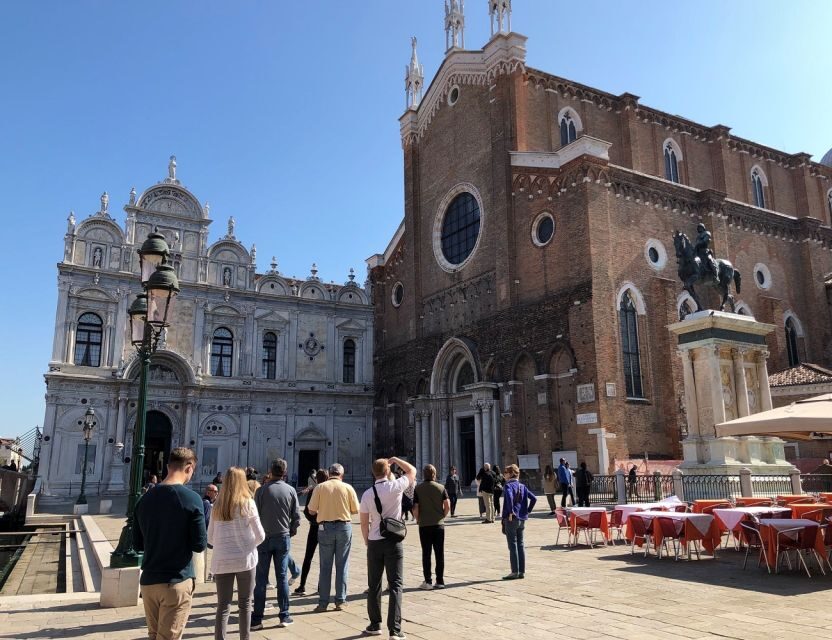
- Campo Santi Giovanni e Paolo: Where the City Feels More Like a City
- Mercerie and St Mark’s Square: Getting Your Bearings Fast
- Why the Mercerie Context Is Worth It
- St Mark’s Square Overview: A Map, Not a Lecture
- The Doge’s Palace Part: Political Power in Stone
- Opera Museum and the Apartments: Seeing Status and Taste
- Institutional Chambers: Where Decisions Happened
- Arms Room and Old Prisons: When Venice Turns Serious
- Bridge of Sighs: A Prison Story With a Built-In Name
- Price and Timing: How to Judge Value at $111
- Who This Tour Fits Best
- Should You Book This Venice Walking Tour + Doge’s Palace Visit?
- FAQ
- Where do I meet my guide for the tour?
- How long is the experience?
- What is included in the price?
- What language options are available for the guide?
- Which areas of Venice does the walking portion cover?
- What do you see inside the Doge’s Palace?
- Do you cross the Bridge of Sighs?
- Is this tour accessible for people with limited mobility?
- What’s the cancellation option?
Key Things I’d Focus On
- Santa Maria Formosa and Campo Santi Giovanni e Paolo stop-offs that feel local, not just landmark-chasing
- Mercerie context: the old shopping spine where faraway goods were once sold
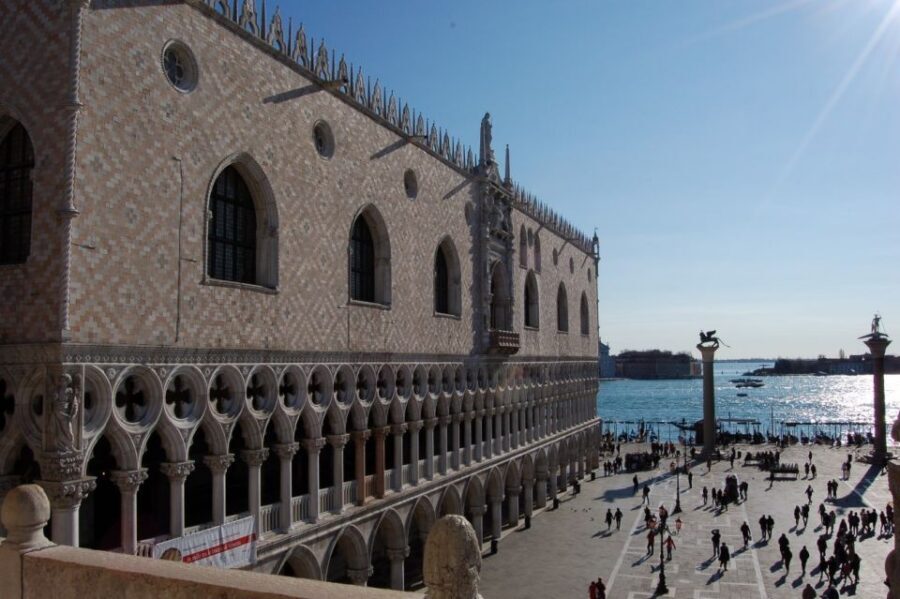
- St Mark’s Square orientation that helps you visually map Basilica, towers, the Procuratie, and the Doge’s Palace
- Inside-the-palace stops like the Opera Museum, Doge’s Apartments, Arms Room, and Old Prisons
- Bridge of Sighs with the famous name explained as part of the prisoner story
- Guides who explain clearly (reviews highlight friendly, high-explanation guides, including one named Barbara)
Walking Through Venice’s Back Streets to the Big Stage
This is a walking-and-guided package designed to do two jobs well: help you understand where you are in Venice, and then give you real context for what you’re looking at. The timing is only about 3 hours, so the route is built around high-impact stops rather than wandering.
You start at the TURIVE kiosk on Calle larga de l’ Ascension, near the post office and behind the Correr museum. That location matters. It puts you close to the cultural center of the city, and it also lines you up for the later approach toward St Mark’s Square—without forcing you to solve Venice’s street puzzle on your own.
The walking portion moves through a sequence of spaces that make Venice feel like a connected city instead of separate attractions. You visit Santa Maria Formosa, then you continue toward Campo Santi Giovanni e Paolo. That’s a helpful pattern: small-to-medium squares are easier to read when a guide gives the historical connections, and they keep the tour from turning into one long sprint toward the big sights.
Other guided walking tours in Venice



Santa Maria Formosa: A Church Stop with a Square Advantage
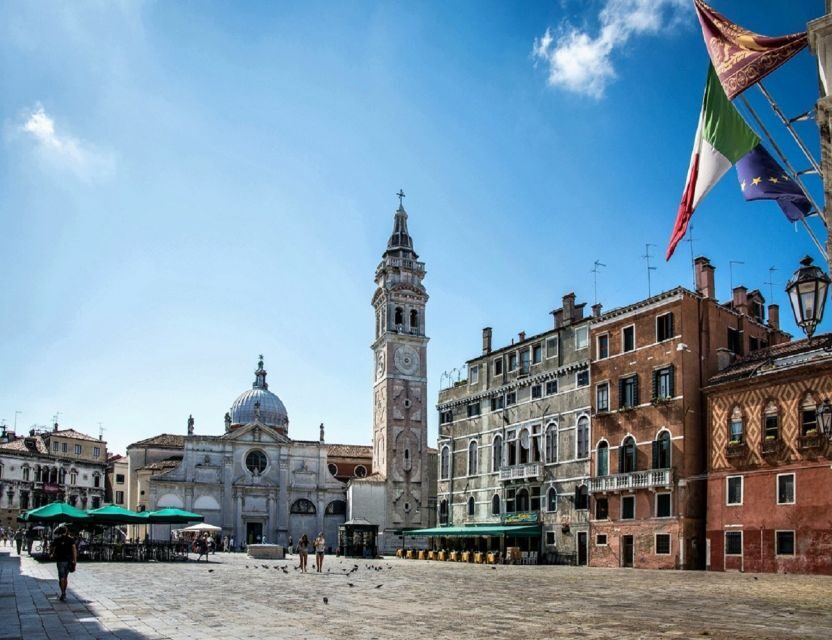
Santa Maria Formosa isn’t presented as a random church check. It’s framed as a moment where the church and the surrounding square work together, so you get the sense of how Venetians moved through public space for centuries. In Venice, that square-to-building relationship is a major part of the visual story, and you’ll understand it faster with a guide than by guessing.
What’s smart here is pacing: you get a “settle your eyes” moment before the tour turns into heavier landmark territory. If you’re the type who gets tired of nonstop sightseeing, this stop helps break the rhythm.
Campo Santi Giovanni e Paolo: Where the City Feels More Like a City
Campo Santi Giovanni e Paolo is another good choice because it keeps the tour grounded in everyday Venice. Rather than treating the city like a theme park, the guide steers you through a place locals and day-to-day visitors can actually recognize as a neighborhood environment.
Even if you’re mostly interested in Doge’s Palace, this kind of lead-in helps you understand why the palace mattered. Venice’s power wasn’t floating in an abstract world—it lived inside a city made of squares, churches, and civic spaces.
Mercerie and St Mark’s Square: Getting Your Bearings Fast
Once the tour starts heading toward St Mark’s Square, it uses one of Venice’s most useful organizing tools: the Mercerie. This was the main shopping street, and the guide’s explanation about precious goods from faraway markets gives the street a purpose. You’re not just walking past pretty facades; you’re tracing how Venice’s trade wealth shaped daily life and building styles.
Why the Mercerie Context Is Worth It
On your own, you might treat the Mercerie like a shopping corridor. With a guide, it becomes a historical shortcut. You see why Venice’s prosperity translated into architecture that looked expensive because it was powered by trade. That helps when you later face the visual drama of St Mark’s Square and Doge’s Palace.
Other walking tours we've reviewed in Venice





St Mark’s Square Overview: A Map, Not a Lecture
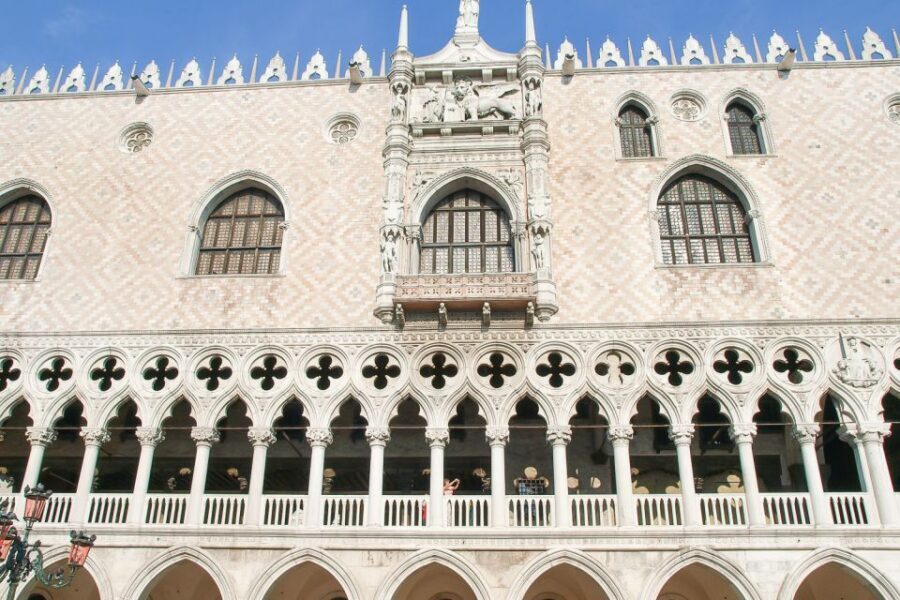
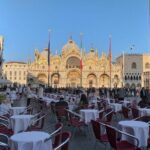
St Mark’s Square can overwhelm you fast. This tour addresses that by giving an overview of the major pieces you’ll see from the square itself: St Mark’s Basilica, the Bell Tower, the Clock Tower, the Doge’s Palace, and the Procuratie.
The practical value here is orientation. You’ll know what you’re looking at before you commit more time elsewhere. And if you plan to return to St Mark’s Square later, you’ll have a mental map that makes the second visit easier and more enjoyable.
One review even mentioned starting early (9:00) to see the square with fewer people, which is a smart advantage if your schedule allows it. Early timing can mean more space to understand the monuments before crowds pack in.
The Doge’s Palace Part: Political Power in Stone

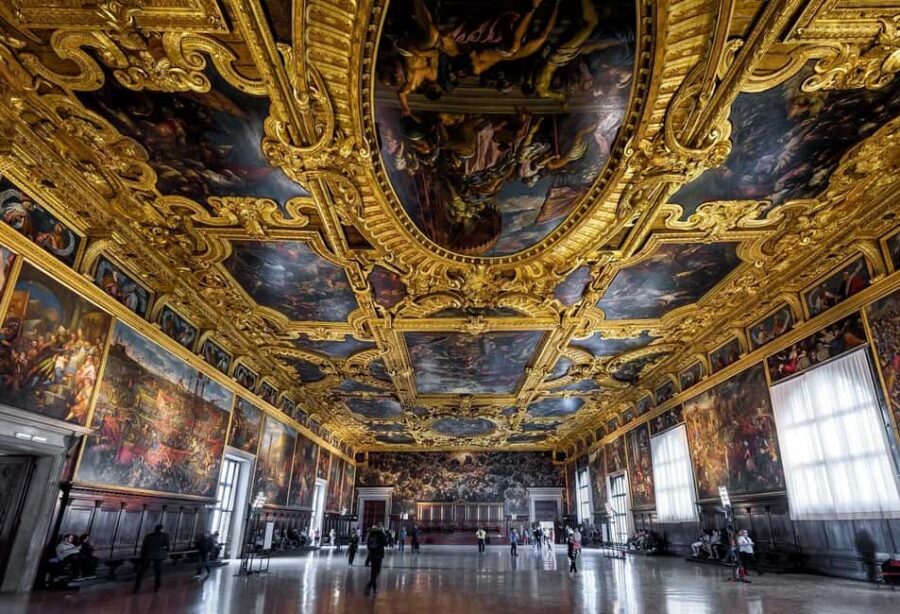
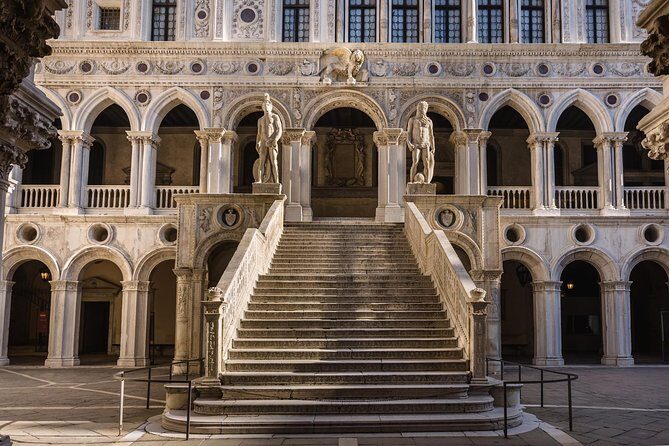
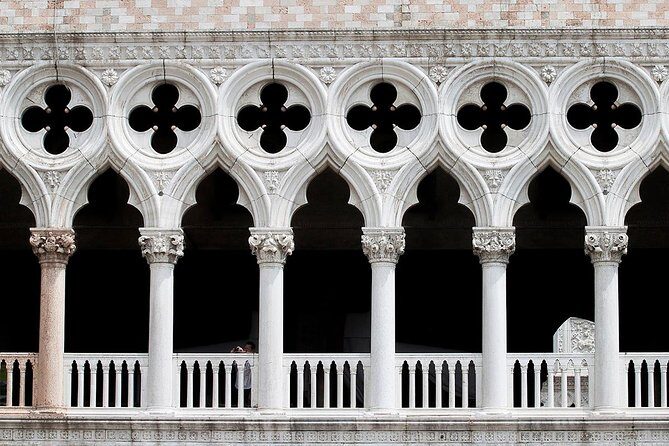
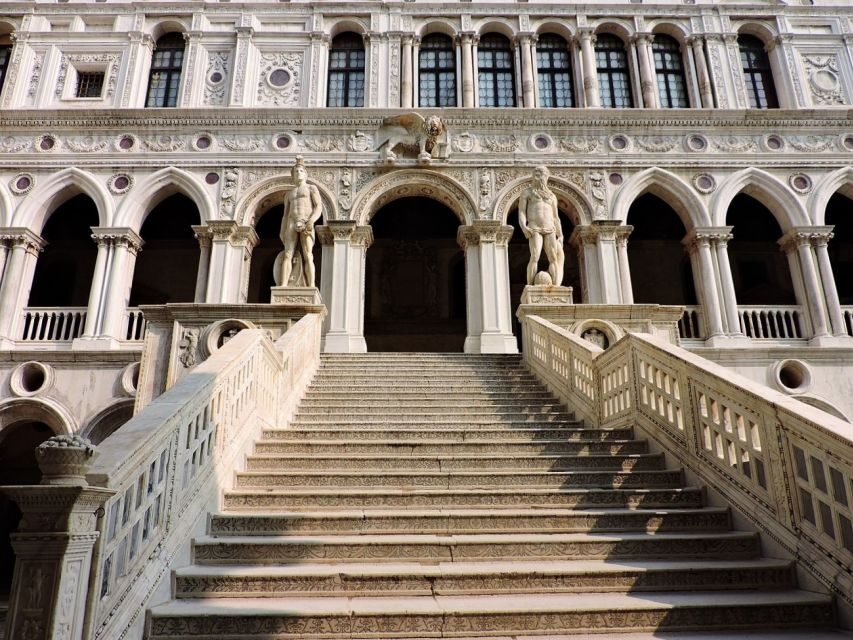
After you’re done with the St Mark’s Square orientation, the program shifts into the main event: the guided visit of Doge’s Palace. This is the symbol of Venice and for centuries the headquarters of its political power. The tour doesn’t just say that—it structures the visit around key areas so you can feel the palace’s different roles: administration, spectacle, justice, and confinement.
Inside, you’ll see several named highlights:
- the Opera Museum
- the Doge’s Apartments
- the Institutional Chambers
- the Arms Room
- the Old Prisons
That list matters because it covers the palace as a whole machine. You’re not just seeing a grand room and calling it a day.
Opera Museum and the Apartments: Seeing Status and Taste
The Opera Museum and the Doge’s Apartments are where you get a sense of how Venice projected authority. The apartments are the kind of place where you start understanding why art, power, and daily governance were mixed together. This is also where the guide’s style can make a big difference.
Reviews strongly emphasize that guides can be friendly and very good at explaining both city history and art history. One guide named Barbara was specifically called out for being passionate and engaging. If your guide is like that, the interior stops feel like they’re talking back to you instead of just ticking boxes.
Institutional Chambers: Where Decisions Happened
The Institutional Chambers are the logical bridge between the street-level walk and the deeper palace story. You’ve already been oriented on the square. Now you step into the machinery of governance. The value is that the tour turns the palace into something functional—decisions, institutions, and power—rather than a single dramatic building.
If you enjoy history that feels connected to real spaces, you’ll appreciate this structure.
Arms Room and Old Prisons: When Venice Turns Serious
Then the tour moves into the darker side of the palace story.
The Arms Room points to defense and readiness, while the Old Prisons make the justice-and-punishment side hard to ignore. This is also where the experience often feels most “real.” Venice wasn’t only pageantry. It ran on systems, including the ones designed to control people.
This is also where the guide’s explanations can rescue you from confusion. Without guidance, it’s easy to get lost in decorative details. With guidance, those details start serving the story.
Bridge of Sighs: A Prison Story With a Built-In Name
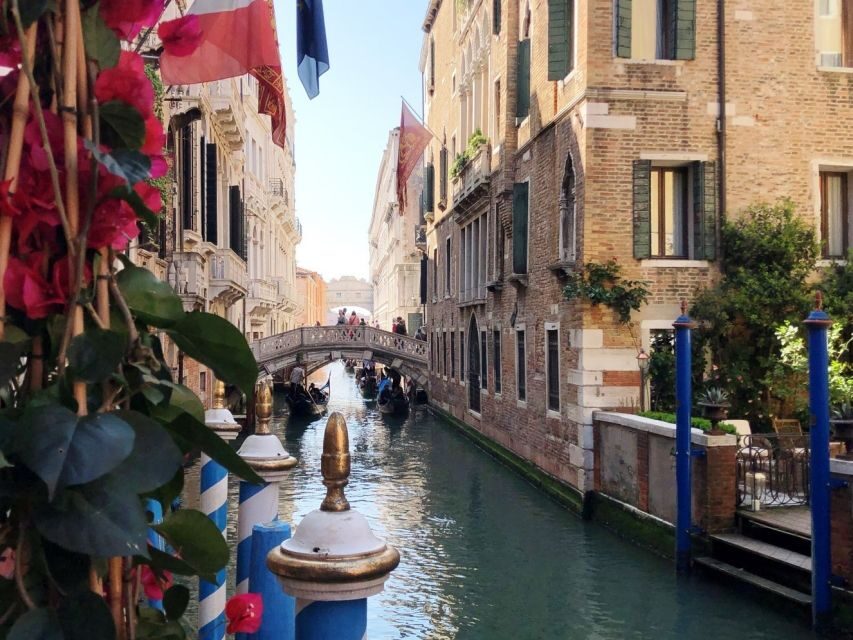
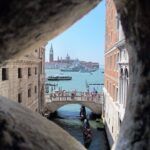
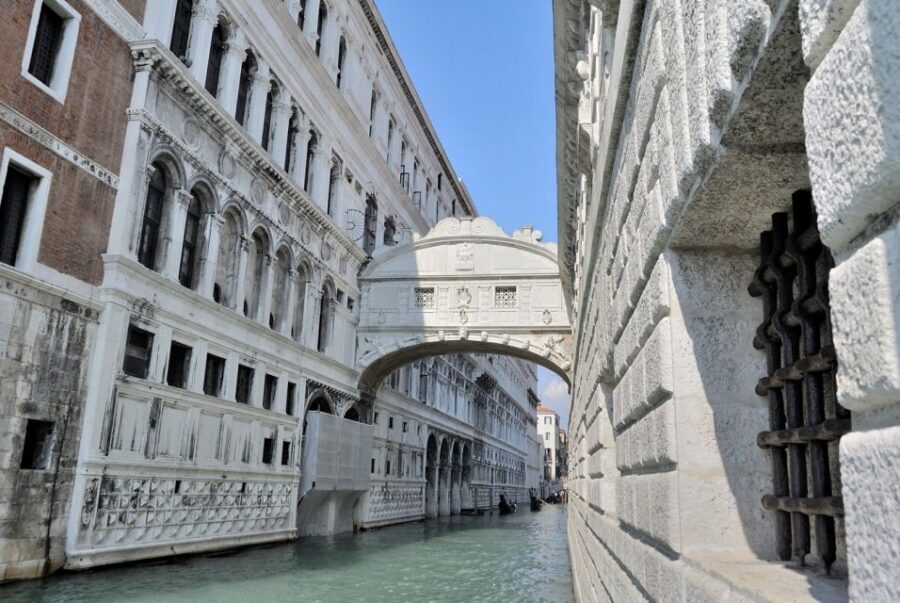
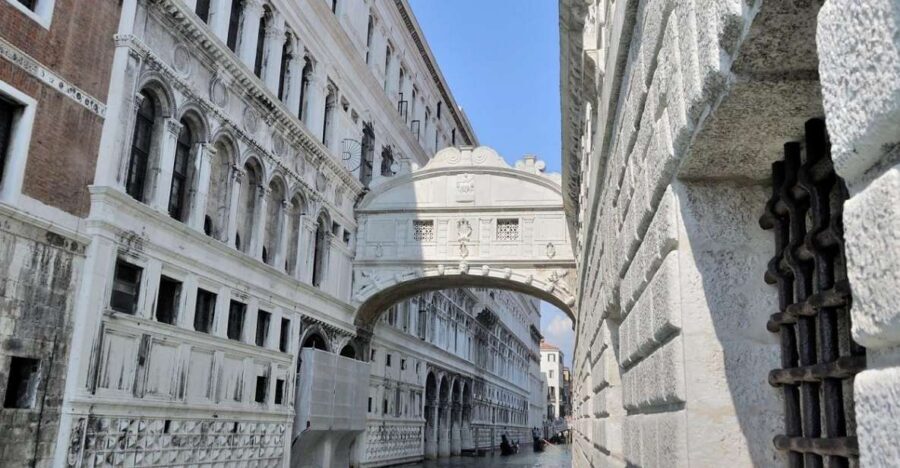
Near the end, you get the chance to cross the Bridge of Sighs, built in 1614 to connect the Doge’s Palace to the New Prisons. The tour connects the famous name to what the guide describes as the last sigh heard from convicts before they were locked up forever.
That’s one of those Venice moments where myth and architecture shake hands. Even if you’ve heard the phrase Bridge of Sighs before, a guide’s explanation makes it land differently. It becomes less about a famous view and more about why a narrow crossing would be designed like that.
It’s also an emotional shift after the more official palace rooms. You finish the palace visit with a sense of how the system worked from inside outward.
Price and Timing: How to Judge Value at $111
At $111 per person for a 3-hour guided format, the value depends on what you want out of Venice.
Here’s the practical math: you’re paying for both a guided experience and a Doge’s Palace admission ticket. You also get a structured route that covers multiple distinct locations—Santa Maria Formosa, Campo Santi Giovanni e Paolo, the Mercerie, St Mark’s Square overview, and then several specific interior areas in the palace.
If you’re the kind of visitor who would otherwise spend time figuring out what to see and how to connect it, this kind of guided build can save effort and help you see more in less time.
That said, timing can be the tricky part. Because it’s a collective tour, you might have a gap—some reviews describe about 40 minutes at St Mark’s Square to bridge between walking and the palace entry. Another review mentioned having to wait for the second group due to delay. In one case, the break between parts was about an hour and a half.
So here’s the decision rule I’d use: if you hate waiting, and you prefer to control your schedule, you’ll feel the gap. If you don’t mind using that time to look around St Mark’s Square or reset your energy, the guide-driven value can feel solid.
Also keep an eye on pacing. One review criticized the palace visit as being rushed (around 45 minutes). That sounds like a “how your specific group is handled” risk. The upside is that other reviews praised guides for giving strong explanations, so the quality can vary.
Who This Tour Fits Best
This combo tour tends to suit you best if:
- you want an efficient way to see both Venice streets-and-squares and the Doge’s Palace interior
- you prefer a guide to connect monuments to story (especially for St Mark’s Square and inside the palace)
- you like city walking tours that include named stops like Santa Maria Formosa and Campo Santi Giovanni e Paolo
- you’re okay with a collective format and possible waiting time between sections
It’s less ideal if you want a fully self-paced schedule with no downtime, or if mobility is a major concern. The tour notes that due to Venice’s physical layout, they cannot guarantee full accessibility for limited mobility.
Should You Book This Venice Walking Tour + Doge’s Palace Visit?
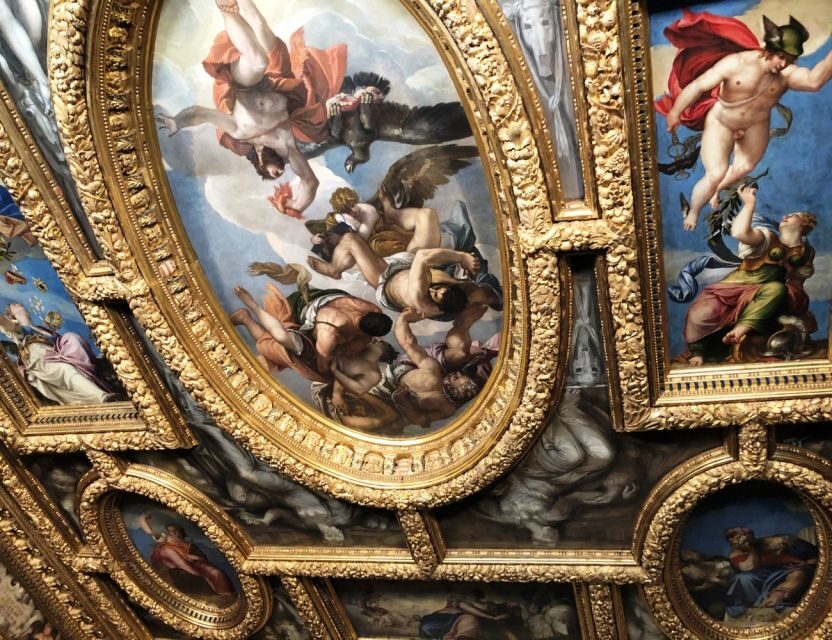
If your goal is to get a guided “story route” through Venice and then hit the Doge’s Palace with context, I think this is a good match. The strongest argument for booking is the structure: Mercerie and St Mark’s Square orientation on the outside, followed by a named-room tour inside the palace, ending with the Bridge of Sighs connection.
I’d only hesitate if timing gaps would annoy you. Since it’s collective, some waiting is possible, and reviews show that the palace portion can sometimes feel rushed depending on how the group timing works out.
My practical advice: if you’re visiting for the first time and you want the palace visit to actually make sense, book it. If you’re already comfortable navigating Venice and you dislike any sense of schedule friction, you might choose a different format that keeps everything in one continuous block.
FAQ
Where do I meet my guide for the tour?
Meet at the TURIVE kiosk on Calle larga de l’ Ascension, near the post office and behind the Correr museum.
How long is the experience?
The total duration is 3 hours.
What is included in the price?
You get a guided tour plus an admission ticket for the Doge’s Palace.
What language options are available for the guide?
Live guide languages listed are Spanish, English, French, and German.
Which areas of Venice does the walking portion cover?
The walk includes stops around Santa Maria Formosa and Campo Santi Giovanni e Paolo, plus the Mercerie route and an overview approach to St Mark’s Square.
What do you see inside the Doge’s Palace?
The guided visit includes the Opera Museum, the Doge’s Apartments, the Institutional Chambers, the Arms Room, and the Old Prisons.
Do you cross the Bridge of Sighs?
The program includes the chance to cross the Bridge of Sighs, connecting the Doge’s Palace to the New Prisons.
Is this tour accessible for people with limited mobility?
The tour states that Venice’s physical layout means they cannot guarantee full accessibility.
What’s the cancellation option?
Free cancellation is available up to 24 hours in advance for a full refund. No-shows aren’t refunded.