REVIEW · VENICE
Full Venice Walking Tour: Doge’s Palace and St. Mark’s
Book on GetYourGuide →Operated by Gray Line Venice - Park Viaggi · Bookable on GetYourGuide
Venice is better with a guide in your pocket. This walking route strings together the city’s biggest icons and some quieter street-level scenes, with skip-the-line entry getting you closer to the art faster. You’ll start on Piazza San Marco, then move through calli and squares before the major ticket stops at Doge’s Palace and St. Mark’s Basilica.
Two things I really like: first, you get story-based context for how Venice worked, not just a photo stop parade. Second, the walk includes practical, everyday Venice moments like social squares and the shopping street of Le Mercerie, so your experience feels like more than monuments on a checklist. If you get a guide such as Cynthia, you may find the explanations are both passionate and packed with details that make the city easier to read as you walk.
One consideration: even with skip-the-line access, security checks can still create waiting, especially around Doge’s Palace. Also, St. Mark’s Basilica has clothing rules and restrictions on large bags—so plan smart or you’ll feel the squeeze.
In This Review
- Key highlights to look for
- Walking From Piazza San Marco: Your Venice Starter Pack
- The San Marco Landmarks You See Before the Big Tickets
- Campo Santa Maria Formosa and the Church of SS. Giovanni e Paolo
- Scuola Grande di San Marco: Charity, Power, and Explorers
- Le Mercerie and the Calli: Venice at Street Level
- Skip the Lines to Doge’s Palace: What You’re Really Paying For
- St. Mark’s Basilica and the Treasury: Gold Mosaics and Pala d’Oro
- Price and Time: Is $142.74 Good Value for 4–4.5 Hours?
- What to Watch For: Hearing the Guide, Getting There Early, and Staying Comfortable
- Who This Tour Suits Best (and Who Might Want a Different Plan)
- Should You Book This Doge’s Palace and St. Mark’s Walking Tour?
- FAQ
- How long is the tour?
- Where does the tour start and end?
- What’s included in the price?
- Is this a skip-the-line tour for both Doge’s Palace and St. Mark’s Basilica?
- What should I bring and wear?
- Is the tour wheelchair accessible?
Key highlights to look for
- Piazza San Marco as your launchpad: you’ll connect the clock tower and Procuratie arcades to Venice’s power center.
- Art-first Doge’s Palace visit: hundreds of artworks in the rooms that once ran the Venetian state.
- St. Mark’s Basilica focus on mosaics and treasure: gold mosaics, marble inlays, and the Pala d’Oro.
- A route that includes real street life: calli and small squares where Venetians still socialize.
- Scuola Grande di San Marco stop: the Great School of Charity and its members linked with important explorers.
- Dress and bag rules that matter: you’ll want comfortable shoes and the right outfit for Basilica entry.
Walking From Piazza San Marco: Your Venice Starter Pack

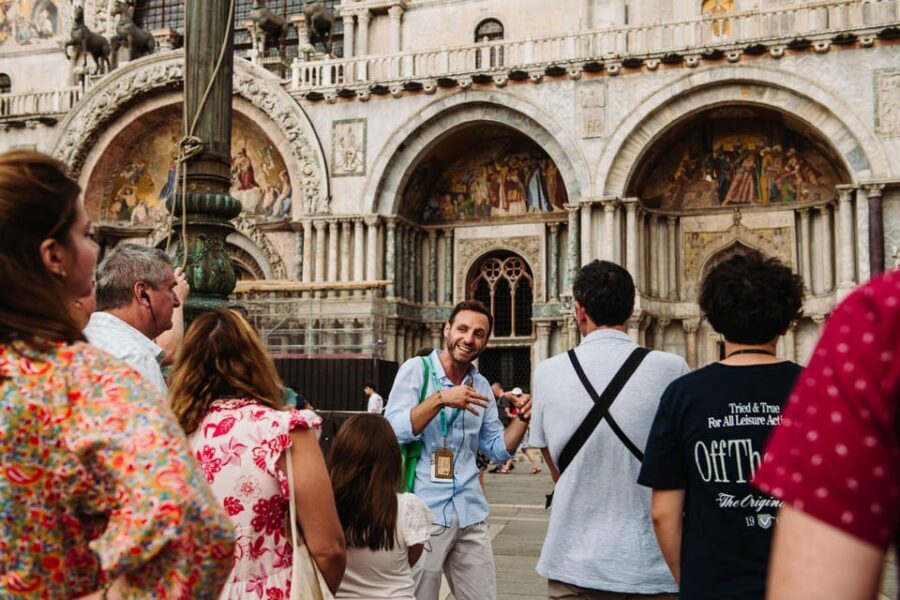
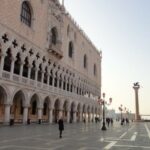
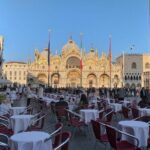
I like how this tour starts where Venice feels most concentrated. Piazza San Marco is the obvious headline, but the best part is that you don’t treat it like a single viewpoint. You use it as a map. Your guide connects what you see—the architecture, the arcades, the political symbols—to how the city built influence from water trade and empire.
From the start, you’ll learn the story of Venice and the Venetian Empire while you pass key landmarks. That matters because without context, Doge’s Palace and St. Mark’s can feel like two separate “big sites.” With context, they start to feel like one connected system: politics, religion, art, and wealth all braided together.
You’ll also be moving on foot through some tight spaces. That’s good for getting your bearings fast. Venice is famous for turning walking into a puzzle, and a guided loop helps you avoid wasting time guessing which way to go.
Other guided walking tours in Venice



The San Marco Landmarks You See Before the Big Tickets
Before you enter the headline attractions, the route gives you useful setup. You’ll pass by the St. Mark’s Clock Tower and the Procuratie—those long arcades that line the square. Even as external views, they teach you what Venice loved: repeated rhythm, public life, and architecture designed for crowds.
You’ll also spot Teatro Malibran on the way. It’s not a deep interior visit, but your guide explains its former role as one of the biggest, richest theatres in the city. I find that kind of detail helps you understand Venice beyond churches and palaces. Culture and entertainment were part of power too.
This pre-ticket section also helps you pace yourself. Doge’s Palace and St. Mark’s Basilica are not quick. By the time you reach them, you’re not starting cold. You already have the big names in your head, and your guide can point out what to watch for inside.
Campo Santa Maria Formosa and the Church of SS. Giovanni e Paolo

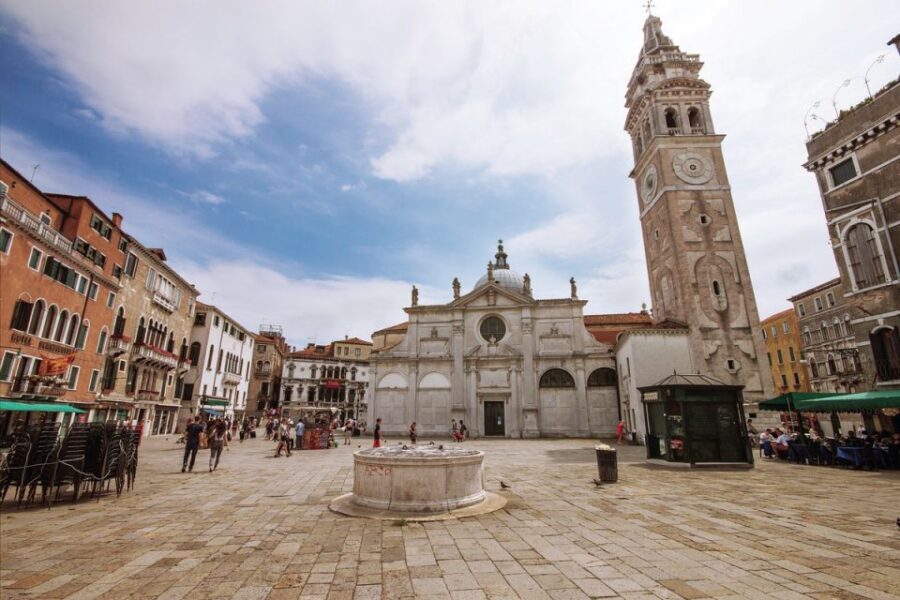
Next comes a change of scenery that I appreciate: Campo Santa Maria Formosa and SS. Giovanni e Paolo. This is one of those stops that makes a walking tour feel worth it, because it’s not just about checking the highest-profile structures.
At SS. Giovanni e Paolo, you’re looking at a famous church and its notable Pantheon. Your guide points out what makes it stand out as part of Venice’s story—who got honored, what kind of symbolism Venice used, and why monumental architecture mattered. If you’re the type who likes to understand the “why” behind what you’re seeing, this is a strong moment.
A practical note: this is still Venice. Streets tighten, and you’ll be on your feet. Comfortable shoes aren’t optional here, and they’re especially important because the tour is about 4 to 4.5 hours.
Scuola Grande di San Marco: Charity, Power, and Explorers
Then you reach the Scuola Grande di San Marco, also described as the Great School of Charity. This is a stop you might not plan on your own, which is exactly why it belongs on a good tour.
Scuole (the big Venetian charitable-schools) were social engines. They weren’t just about helping the needy; they were also a way for powerful members to display status, fund art, and shape public identity. Your guide connects the group’s role to the wider world Venice influenced—especially through members sometimes linked with the Captains of Fortune label, including some of the 15th-century Italian explorers.
I like this stop because it shifts the lens. You start with empire and palaces, but you end up seeing how Venice’s wealthy and ambitious families organized themselves through civic institutions.
Le Mercerie and the Calli: Venice at Street Level
On the way back toward Piazza San Marco, you’ll pass Le Mercerie, the shopping street that once served as the pulsing heart of the city’s commercial life. This is where the tour earns its “walking” part. It’s not random wandering. You’re moving through the kind of route Venetians actually used: the paths for commerce, errands, and daily social life.
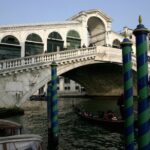
As you go, your guide also points out the small alleys called calli and the picturesque squares where Venetians still gather. These are the moments that help Venice stop being just postcard views. You notice how locals move through the city, how space is used, and how the city’s design encourages conversation.
And yes, this is the part where you’ll want to slow down for a second—because Venice photography is easy to overdo. Instead of chasing every angle, look for the scenes your guide describes: how a doorway, a square, or an arcade frames everyday life.
Other Best-of-Venice city tours we've reviewed in Venice



Skip the Lines to Doge’s Palace: What You’re Really Paying For
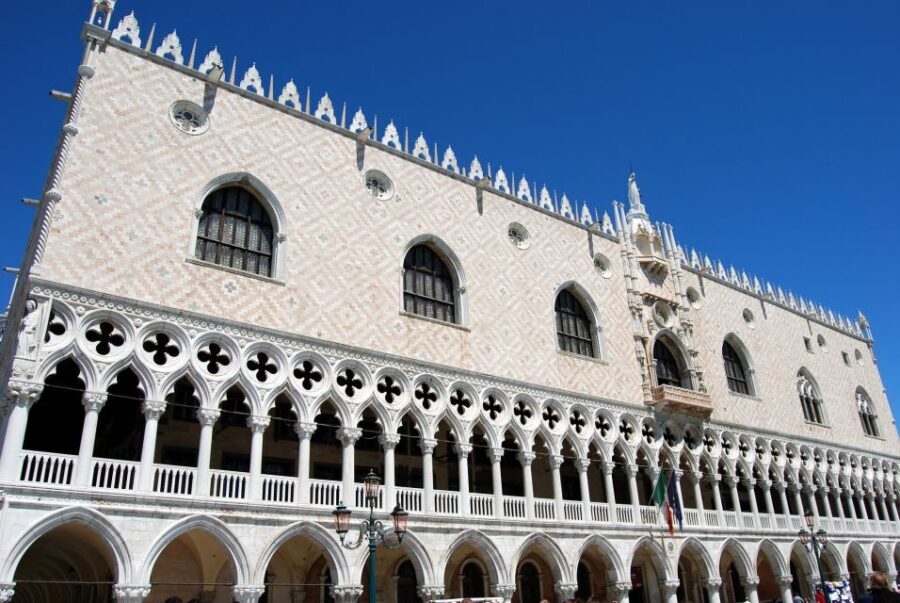
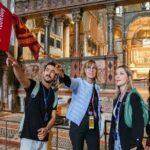
Eventually, you hit the reason many people book this tour: Doge’s Palace. Skip-the-line access helps, but the key value here is not just shorter queues. It’s that you walk into the place with a guide who understands how to frame what you’re seeing.
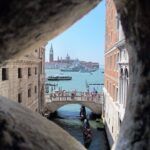
Doge’s Palace was the seat of Venetian political power for centuries. That single fact changes your whole experience. You don’t look at rooms as pretty interiors. You start reading them as a machine for governance and prestige.
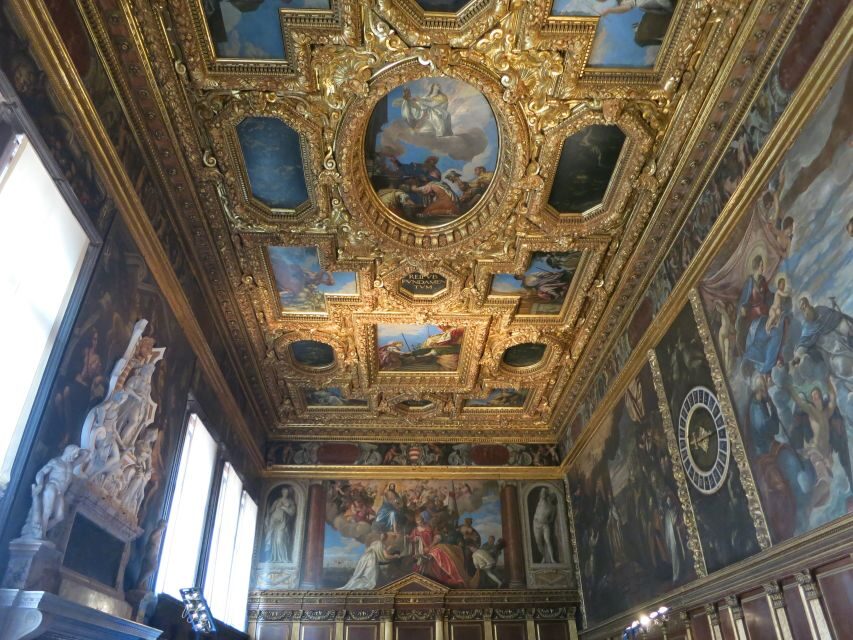
Inside, you’ll see masterpieces of art across many rooms—described as hundreds of works. The palace is so packed with meaning that it’s easy to feel overwhelmed if you’re alone. With a guide, you get a route through the chaos: what to prioritize, what symbols to watch for, and how the art ties back to state power.
One reality check: even with skip-the-line entry, security measures can still mean you pass through checks before entry. Build in patience and keep your bag policy in mind so you don’t slow yourself down.
St. Mark’s Basilica and the Treasury: Gold Mosaics and Pala d’Oro
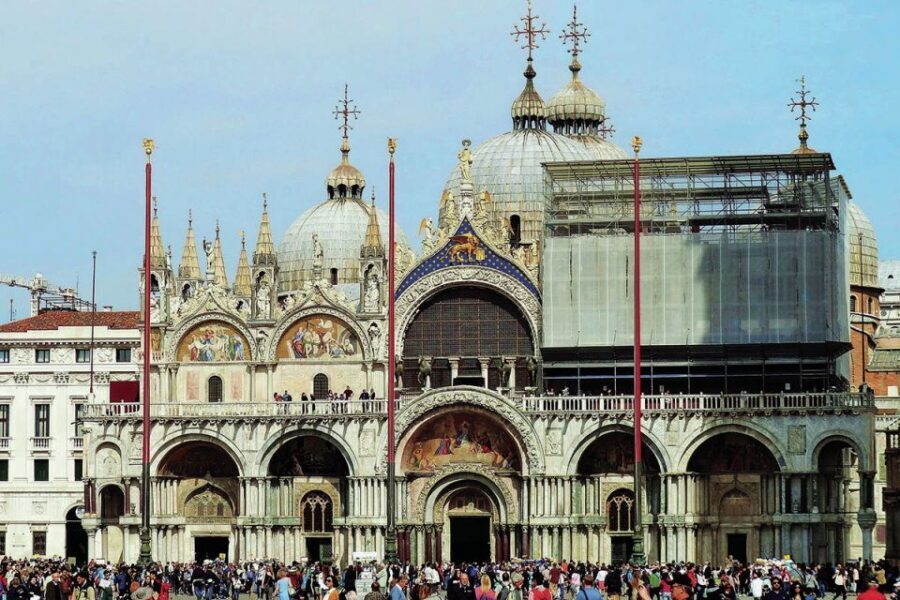
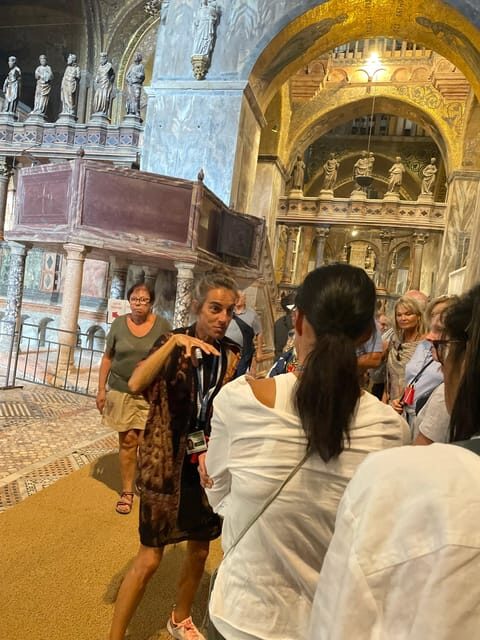
After Doge’s Palace, you’ll enter St. Mark’s Basilica, described as a beautiful Byzantine monument. This is where Venice turns glossy and bright in a way that feels almost unreal after the darker interior rooms of a palace.
Your guide explains Saint Mark and how his ruins came to rest here. That origin story matters, because the basilica is not just decorative. It’s built as a statement of religious power and Venetian identity.
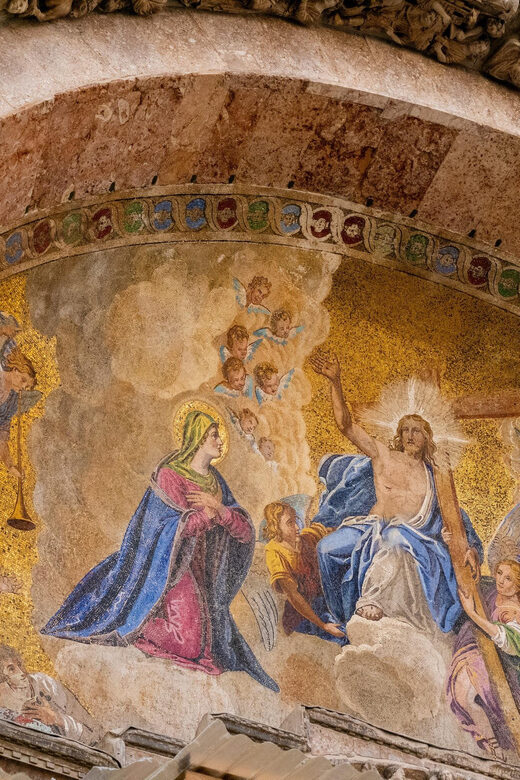
You’ll focus on the gold mosaics and marble inlays—plus learn about the architectural masterpiece and its priceless treasures. Then you go to the Treasury for a splendid example of religious art, and you’ll see the Pala d’Oro: gem-encrusted and known for thousands of gems and precious stones.
If you’ve visited churches before, you might expect this to be a quick “wow, gold, done” moment. With a guide, you’ll likely notice the structure behind the shimmer: how the design creates a visual hierarchy and how the treasures function as symbols of wealth and devotion.
Practical reminder: St. Mark’s Basilica has dress requirements (no bare knees or shoulders), and large backpacks/bags aren’t permitted inside. Wear something that fits the rule and keep your essentials light.
Price and Time: Is $142.74 Good Value for 4–4.5 Hours?
At $142.74 per person for about 4 to 4.5 hours, this isn’t a bargain tour. But it’s also not overpriced when you consider what’s included.
You’re getting:
- Entrance ticket coverage for Doge’s Palace
- Skip-the-line access for both Doge’s Palace and St. Mark’s Basilica
- A live guide in English or Spanish
The value part is the combo. Buying tickets separately in Venice can add up fast, and the skip-the-line benefit can save meaningful time at these high-demand stops. Then you layer on the walking context—San Marco landmarks, SS. Giovanni e Paolo, the Scuola Grande di San Marco, and the calli and social squares.
So the question isn’t just cost. It’s whether you want your time protected and your stops connected with explanation. If you like understanding what you’re seeing (and you’re not trying to speedrun Venice on your own), this price tends to make sense.
If you’re the type who loves casual wandering with no structure, you might feel the cost is higher than you need. But for people who want a tight, high-impact loop with fewer decision points, $142.74 can be a fair trade.
What to Watch For: Hearing the Guide, Getting There Early, and Staying Comfortable
This tour is a group experience, and group experiences can be won or lost on the details. A few tips based on issues that can happen on tours like this:
- Meeting point confusion can happen: sometimes the location link people rely on can be off. For safety, arrive early and use Piazza San Marco itself as your anchor point. Look for your guide branding and signage on-site.
- If you struggle to hear, move closer when you can. On long walks through crowded streets, guides who speak too quietly can make the story part harder to enjoy.
- Radio equipment can be involved, and if you’re given a radio unit without the convenient hanging string, ask for the accessory or a way to carry it so your hand isn’t cramping for hours.
- Start late? It’s avoidable: if you want the best flow, show up a little early. Venice logistics are real.
Also, remember the tour is not designed for people who need step-free wheelchair access. It’s listed as not suitable for wheelchair users.
Who This Tour Suits Best (and Who Might Want a Different Plan)
I think this tour fits best if you want three things at once:
1) Top-tier sights with skip-the-line entry
2) A route that connects politics and religion to what you see in the art
3) A walking sample of daily Venice between the major monuments
It’s especially good for first-timers who want to understand how Venice’s power system shows up in stone, mosaics, and palaces. If you like art and architecture but also want the story behind them, you’ll likely feel more satisfied than you would with a pure museum-style ticket.
You might want a different plan if:
- You hate walking for 4 to 4.5 hours and prefer a slower pace
- You’re not up for dress code rules at St. Mark’s Basilica
- You need wheelchair-friendly routing
Should You Book This Doge’s Palace and St. Mark’s Walking Tour?
If your priority is seeing Venice’s most important symbols—Doge’s Palace and St. Mark’s Basilica—without burning time in long queues, I’d book it. The strongest reason is the combination of guided context plus skip-the-line access for both sites, plus the street-level Venice in between.
My final nudge: go in with comfortable shoes, light bags, and the right outfit for Basilica entry. Arrive early at Piazza San Marco so you’re not dealing with last-minute confusion. If you do that, this tour has a clear payoff: you leave with Venice feeling like a connected story, not a stack of disconnected highlights.
FAQ
How long is the tour?
It runs about 4 to 4.5 hours, depending on the starting time available.
Where does the tour start and end?
You meet on Piazza San Marco. The tour ends back at the meeting point.
What’s included in the price?
Included are the entrance ticket to Doge’s Palace, skip-the-line access to the Doge’s Palace and St. Mark’s Basilica, and a live guide.
Is this a skip-the-line tour for both Doge’s Palace and St. Mark’s Basilica?
You get skip-the-line access, but you should still expect security checks that can cause some waiting.
What should I bring and wear?
Bring a passport or ID card and wear comfortable shoes. For St. Mark’s Basilica, you’ll need appropriate clothing with no bare knees or shoulders. Large backpacks/bags aren’t permitted inside the basilica.
Is the tour wheelchair accessible?
No. It’s listed as not suitable for wheelchair users.