REVIEW · VENICE
Immersive Beauty: A Tailored Private Tour of the Doge’s Palace
Book on Viator →Operated by deTourist Venice Valerio Coppo · Bookable on Viator
Venice’s power lives in every room here. This private Doge’s Palace tour is built around fast-track entry and a clear story of how the Republic of Venice worked, not just what it looked like. I especially love the tailored pacing with Licensed guide Valerio Coppo, plus the chance to see lesser-known corners rather than only the loud, standard route. One thing to plan for: the palace entrance ticket isn’t included in the tour price, so you’ll need to add that cost.
You start in the most Venetian spot of all—St. Mark’s Square—at Caffè Florian, then move straight into the palace with help getting the skip-the-line tickets at the best possible rate. It’s a private tour, so you’re not stuck waiting for the slowest group or dodging people trying to photograph the same ceiling twice.
In This Review
- Key highlights worth your time
- First stop: St. Mark’s Square, not just a pretty view
- Caffè Florian meetup: a smart, easy launch point
- Inside the Doge’s Palace: the staircases that teach you the hierarchy
- Scala dei Giganti di Palazzo Ducale
- Loggia views from the arches
- Scala d’Oro (Golden Staircase)
- Atrio Quadrato: the waiting room of the whole machine
- Political rooms in order: Quattro Porte to the Council Chamber heart
- Sala delle Quattro Porte (four doors room)
- Sala dell’Anticollegio (the antechamber)
- Sala del Collegio (Hall of the Full Council)
- Senato and the mechanics of state
- Consiglio dei Dieci (Council of Ten)
- Sala della Bussola: justice, espionage, and anonymous accusations
- Military side: the Armeria and Venice’s maritime muscle
- Legal system follow-up: Quarantia Civil Vecchia
- Art in the middle of power: Guariento’s Room and the Picture Gallery
- Sala del Guariento
- Quadreria (Picture Gallery)
- Bridge of Sighs: romantic legend meets the real thing
- New Prisons: Prigioni Nuove
- How the tour feels in real life (and why the tailoring matters)
- Price and value: is $185.43 per person a fair deal?
- Who this tour suits best
- A simple downside to consider
- Should you book the Doge’s Palace private tour?
- FAQ
- Are the Doge’s Palace entrance tickets included?
- How long is the tour?
- Is this a private tour?
- What language is the tour offered in?
- Where do we meet?
- Are service animals allowed?
Key highlights worth your time
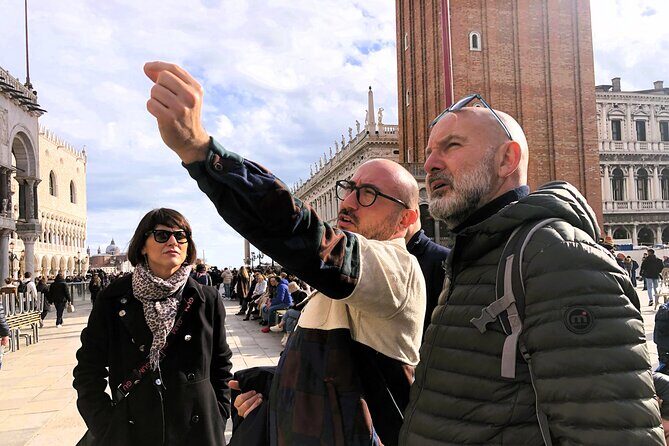
- Fast-track entry from the first minute: less queue time, more looking time
- A guide who tailors the route to your interests: art, politics, or justice, your call
- Hidden-feeling palace stops: secret-adjacent stories and rooms most people miss
- Stairs and views that explain power: Scala dei Giganti, Scala d’Oro, Loggia moments
- The justice trail made understandable: from anonymous accusations to the New Prisons
First stop: St. Mark’s Square, not just a pretty view
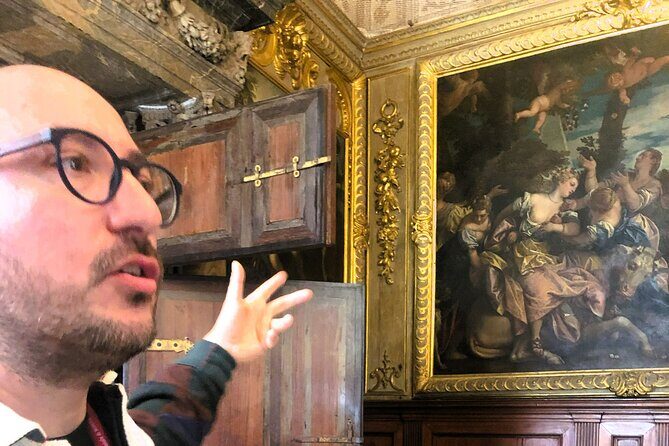
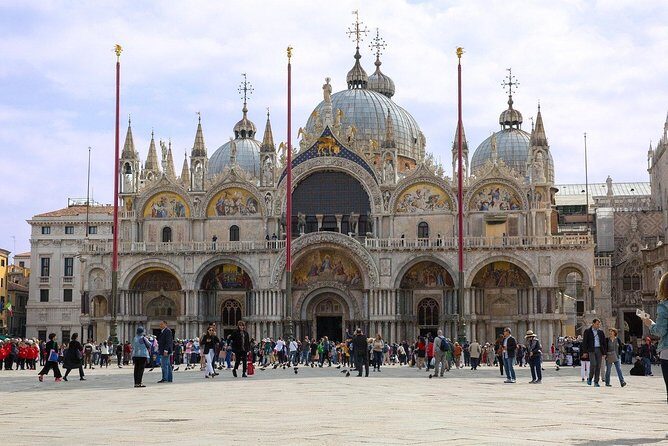
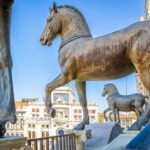
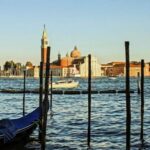
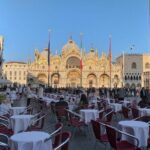
Most Doge’s Palace visits start “inside,” but this one gives you the key outside context first. You begin at Piazza San Marco with the guide pointing out why this square mattered to Venice’s rulers—social life, official ceremonies, and the whole idea that governance happened in public space.
Even if you’ve seen photos of the square a hundred times, you’ll enjoy the way your guide turns landmarks into meaning. Instead of random marble and arches, you start to connect the palace’s role to what you’re standing next to.
Practical note: this early part is only a short stop, so if you want a long wander, keep that for after the tour. The advantage here is momentum.
Other private and VIP tours at Doge's Palace & Venice in Venice
Caffè Florian meetup: a smart, easy launch point
Meeting at Caffè Florian (P.za San Marco, 57) is convenient because it’s right where you want to be. The area is well-served by public transportation, and the meeting point is easy to spot even if you arrive a bit flustered (Venice is like that).
You’ll end back at the meeting point, which is helpful. After two hours inside and around the palace, you won’t have to re-solve navigation in the maze.
Inside the Doge’s Palace: the staircases that teach you the hierarchy
The Doge’s Palace is famous for looks, but the structure is really about ranking and control. Your guide helps you read the building like a map of political power—who moved where, who watched whom, and why certain rooms exist.
Scala dei Giganti di Palazzo Ducale
Right as you enter, you’re met by the sense of authority in the palace’s internal courtyard. The Scala dei Giganti (the Giants’ Staircase) is your first big lesson: the sculptures and symbols aren’t decoration. They reinforce who had legitimacy and who demanded obedience.
This is a great early stop because it sets the tone. If you care about art, you’ll like the iconography. If you care about government, you’ll like the way it explains authority without using heavy academic language.
Loggia views from the arches
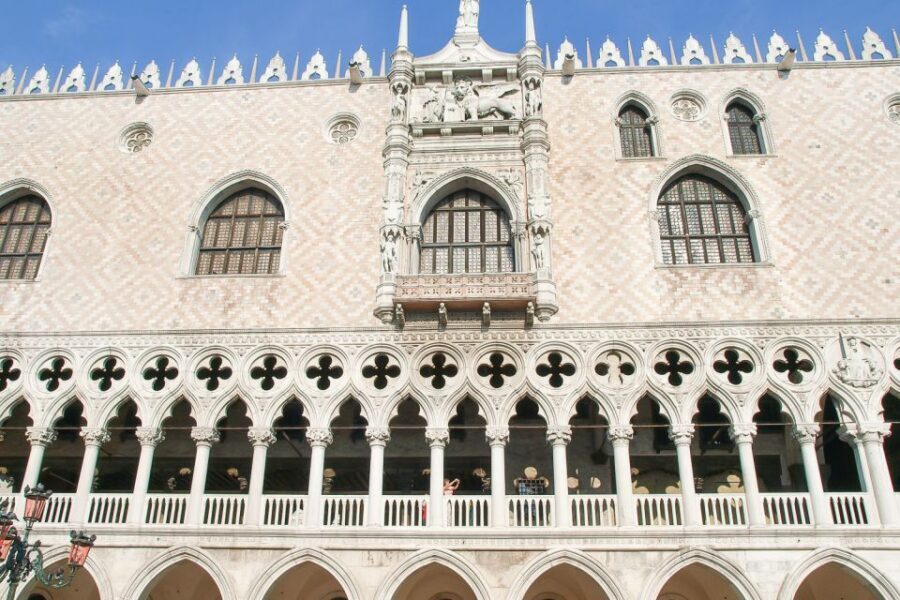
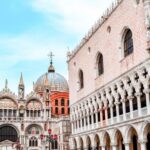
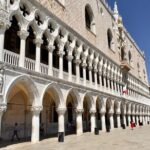
Next comes the Loggia, with those arches that give you a dramatic view back toward St. Mark’s Basilica and the square below. This matters because Venice’s leaders weren’t hiding. They performed power—right out in the open.
From a visitor’s standpoint, this is also your visual break. You’re not staring at walls for the whole tour. You get to step back and look out.
Other private tours in Venice


Scala d’Oro (Golden Staircase)
Then you climb the Scala d’Oro. This is opulence as a system: the palace doesn’t just hold political decisions; it advertises them. Your guide points out the artistic and historical elements so the staircase becomes more than a wow moment.
It’s a strong point for anyone who thinks the palace is only about paintings. The building is also propaganda in stone.
Atrio Quadrato: the waiting room of the whole machine
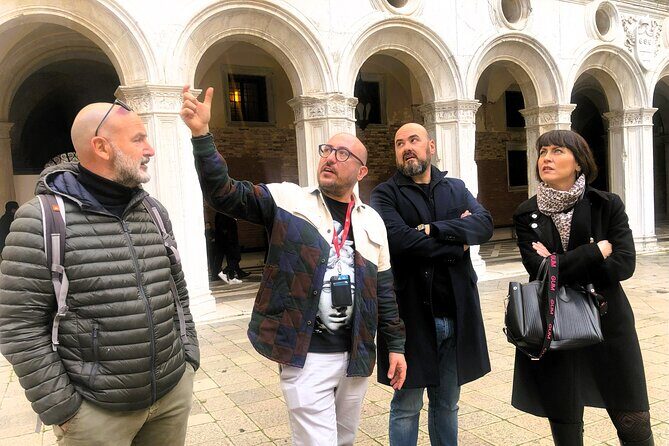
In the Atrio Quadrato (the square-shaped atrium), you’ll see how space controlled movement. Your guide explains the purpose of this area and how it fits into daily functioning inside the palace.
This is one of those stops that can be boring on a rushed tour. Here, it works because the guide’s story makes it practical: why the palace’s layout exists, not just what’s painted on the walls.
Political rooms in order: Quattro Porte to the Council Chamber heart
The heart of the palace is politics—alliances, voting, legislation, and the ongoing challenge of maintaining stability in a city-state that traded with (and depended on) much of the world.
Sala delle Quattro Porte (four doors room)
You’ll visit the Sala delle Quattro Porte, where the room’s political history and artwork take center stage. Your guide connects what you see to how diplomacy and decisions played out. The “four doors” concept becomes a way to understand how people came and went—how the system flowed.
Sala dell’Anticollegio (the antechamber)
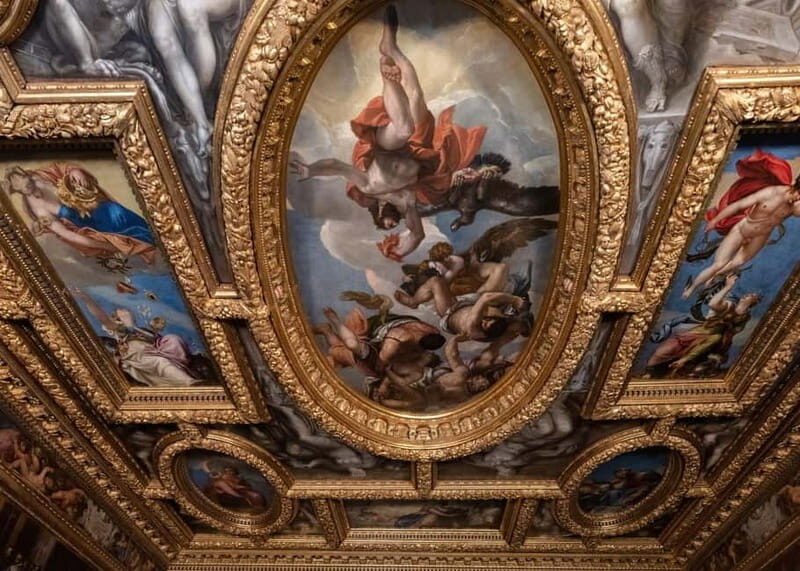
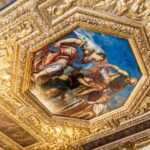
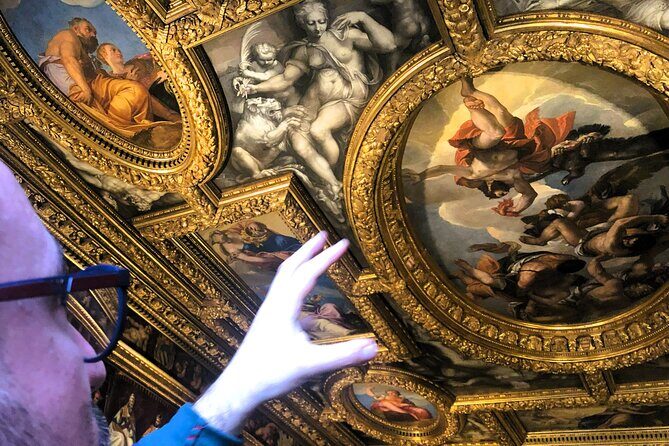
Then comes the Sala dell’Anticollegio, an antechamber filled with masterpieces by artists such as Tintoretto and Veronese. Even if you’re not an art expert, you’ll get a usable framework: why these works were placed here and how they supported the palace’s cultural identity.
This is a good moment to slow down. Don’t just glance up and move on. Look at what your guide calls out.
Sala del Collegio (Hall of the Full Council)
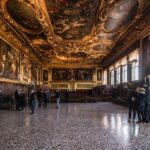
The tour moves into the Sala del Collegio, described as the heart of political decision-making. This is where your guide turns “government” into drama—how the Venetian Republic made choices that shaped the city’s future.
If you like story-driven history, this is a high point.
Senato and the mechanics of state
Next you reach the Senato—where senators convened to discuss matters of state. Your guide explains the political structure and what “state business” meant in practice.
This helps you understand Venice as a system, not a collection of cool rooms.
Consiglio dei Dieci (Council of Ten)
After that, you’ll enter the Consiglio dei Dieci, a council tied to maintaining stability and order. The tone changes here. It’s still political, but it feels more guarded—less public-facing, more about controlling risk.
Venice needed stability because it was also vulnerable: to intrigue, to power struggles, to the consequences of trade and empire.
Sala della Bussola: justice, espionage, and anonymous accusations
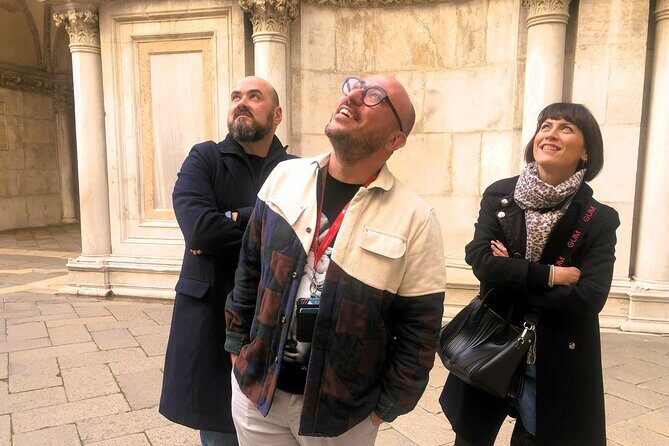
One of the most memorable stops is the Sala della Bussola, also known as the Compass Room. The name comes from the small window where anonymous accusations were submitted.
Your guide explains the justice system as a lived tool, including the idea of secret denunciations. You’ll hear how citizens could report suspicious behavior anonymously and how that fed into Venetian control.
This room is a reminder that “justice” isn’t only courts and laws—it’s also the fear of being reported, and the careful balance between order and legitimacy. You might think you’ve already understood Venice, then this place corrects that.
If you’re traveling with kids, this stop can go either way depending on how your guide frames it. The guide’s flexibility is a key reason the tour works for mixed ages.
Military side: the Armeria and Venice’s maritime muscle
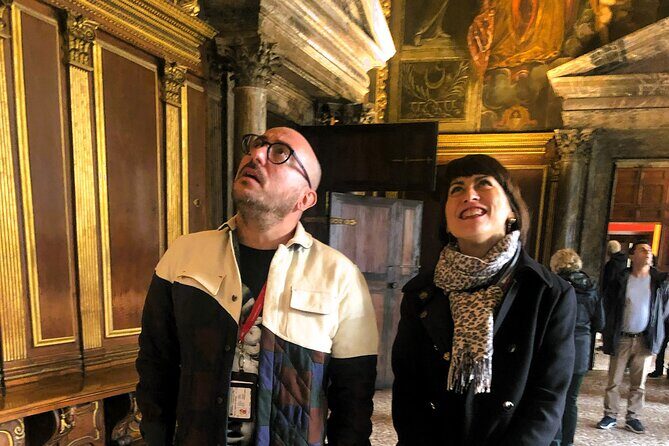
The Armeria (armory) shifts the story to defense. Your guide talks about military might, battles, alliances, and why maritime security mattered for a trading republic.
It’s a useful counterweight to all the political drama. It keeps Venice grounded in real-world problems: ships, routes, and the ability to protect them.
Legal system follow-up: Quarantia Civil Vecchia
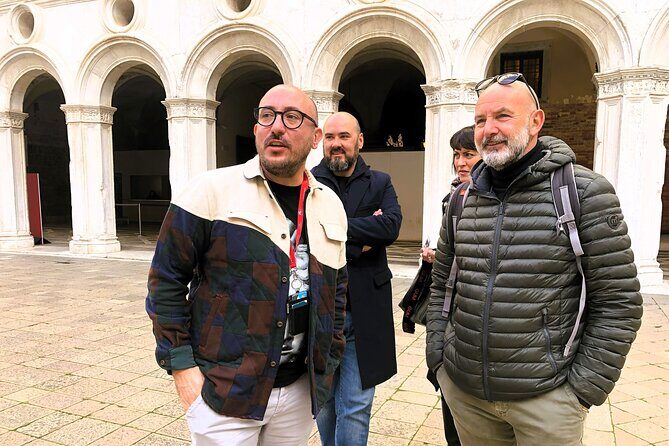
Then the Chamber of the Quarantia Civil Vecchia takes you into the justice framework. Here the focus is legal procedure and the role of justice in maintaining order.
If you’ve enjoyed how the Compass Room explained anonymous accusations, this stop helps connect the dots: how accusation leads to governance and how law becomes a daily function of the state.
Art in the middle of power: Guariento’s Room and the Picture Gallery
The palace is not only “politics with paintings.” It’s cultural messaging in a political shell.
Sala del Guariento
You’ll admire the Sala del Guariento. Your guide points out the artwork and explains how Venetian creativity during its golden age showed up inside the government complex.
Quadreria (Picture Gallery)
Finally, you’ll visit the Quadreria (Picture Gallery). This is where the cultural side becomes a full experience rather than a support act.
Your guide helps you understand the artworks’ role in depicting Venice’s artistic and cultural energy—so you leave seeing more than just famous names.
Bridge of Sighs: romantic legend meets the real thing
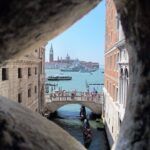
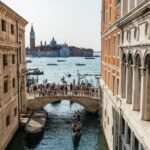
After the council and justice rooms, you cross the Ponte dei Sospiri (Bridge of Sighs). This is one of those spots where you can get misty-eyed from stories alone—yet your guide keeps it tied to what actually happened there.
You’ll hear the tales about prisoners who crossed it and how the bridge became an icon of confinement. It’s short, but the contrast is powerful: you move from decision-making rooms to the consequences.
New Prisons: Prigioni Nuove
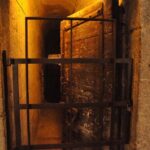
The tour ends with the Prigioni Nuove (New Prisons). This is the darker side of the Venetian justice system. Your guide walks you through the prison setup and the judicial processes connected to imprisonment.
This stop gives closure. You don’t just learn that Venice had laws; you see what those laws meant for people inside the system.
How the tour feels in real life (and why the tailoring matters)
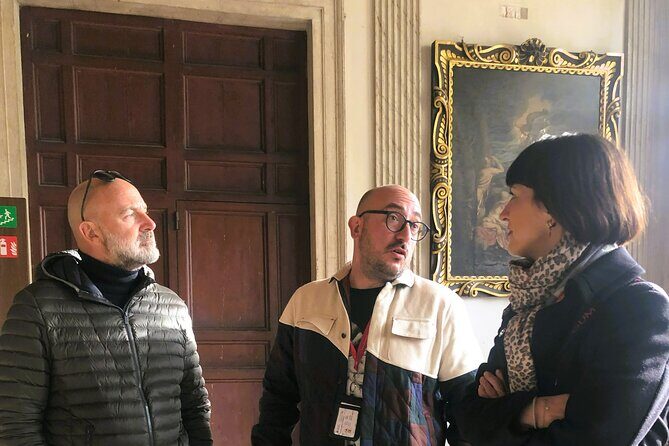
A private tour changes the whole rhythm. You can ask follow-up questions without worrying about slowing down strangers. You can focus on what matters to you, instead of doing a checklist.
That tailoring is a big deal here. With guide Valerio, the experience is built around your interests—whether you lean toward art and architecture, political structure, or justice and intrigue. The guide also adapts the pacing for children (including mixed groups), which is rare in places like this where adults often run the tempo.
Another practical win: your guide assists with skip-the-line tickets at the best possible rate. Since palace entrance tickets aren’t included in the tour price, this help matters. It reduces stress and helps you spend more of your time in rooms instead of figuring out ticket queues.
Price and value: is $185.43 per person a fair deal?
At $185.43 per person for about two hours, the value depends on your priorities.
Here’s what you’re paying for:
- Private, licensed guiding (not a loud group microphone situation)
- Fast-track entry so your time inside the palace starts quickly
- Tailored route that aims beyond the same exact highlight reel
- Skip-the-line ticket assistance so you’re not stuck at the most annoying moment of the day
What’s not included:
- Doge’s Palace entrance tickets (with special fares for families, seniors, youth, and students)
So the tour price is a “guide + access strategy” cost, not the full all-in museum total. If you’re paying palace tickets anyway, this can be a smart way to convert your time into context and meaning.
Who this tour suits best
This is a strong fit if:
- You hate crowds and want to start quickly
- You like your history explained with clear cause-and-effect
- You want a private pace for photos and questions
- You care about the palace beyond the famous postcards (especially the justice rooms)
It’s also a good choice for families, because the guide can shape the explanation for kids and still keep the adults engaged.
A simple downside to consider
The biggest downside is also the most basic: entrance tickets are not included. If you only budget for the tour fee, you’ll feel surprised later. Plan for the palace ticket cost, and you’ll be happier.
Also, because it’s a curated route, you won’t have unlimited free roaming time inside. If you want to wander at your own speed for a long time, pair this with extra self-guided time after.
Should you book the Doge’s Palace private tour?
Yes—if you want the palace to make sense. You’ll get fast entry, a guided path through the political and justice machine, and the kind of context that turns rooms into story instead of scenery.
Skip it only if your plan is mostly about ticking off rooms fast with no questions. In that case, a cheaper option might fit. But for most people, the time saved, the tailored approach, and the guide’s ability to connect art, power, and justice makes this a very practical way to experience Venice’s most intense landmark.
FAQ
Are the Doge’s Palace entrance tickets included?
No. The tour price does not include entrance tickets for the Doge’s Palace. The guide can help with skip-the-line tickets, and there are special fares for families, seniors, youth, and students.
How long is the tour?
It runs for about 2 hours.
Is this a private tour?
Yes. It’s private, so only your group participates.
What language is the tour offered in?
The tour is offered in English.
Where do we meet?
You meet at Caffè Florian, Piazza San Marco 57, Venice. The tour ends back at the same meeting point.
Are service animals allowed?
Yes, service animals are allowed.