REVIEW · VENICE
Doge’s Palace & St. Mark’s Basilica Tour
Book on Viator →Operated by Bucintoro Viaggi · Bookable on Viator
Venice is a maze; this tour helps you glide. In about three hours, you’ll connect Piazza San Marco to the Doge’s Palace and then step into St. Mark’s Basilica with an English guide and built-in headsets. You’re not just looking at monuments—you’re getting the “why” behind the shapes, symbols, and power plays that made Venice Venice.
I especially like that St. Mark’s Basilica admission is included, so you avoid last-minute ticket hunting. I also like the pacing: you’re given enough time in the square and the basilica to actually notice details instead of sprinting. The main drawback to think about is timing and access—this area runs crowded, and St. Mark’s Basilica is not open for admission on Sundays, plus you should double-check your confirmation messages close to departure.
In This Review
- Key highlights you’ll actually feel
- First stop: Piazza San Marco, Venice’s grand stage
- Doge’s Palace: Venetian power, architecture, and rules in stone
- What you should watch for while you’re there
- St. Mark’s Bell Tower and Clock Tower: a short lesson in rebuilds and timing
- Procuratie arcades: the square’s “edges” that run the show
- St. Mark’s Basilica: Italo-Byzantine mosaics and rules you must follow
- Dress code: the one thing you can’t wing
- Sundays: a hard stop
- Pace, group size, and how the tour feels in real life
- Price value at about $117.11: what you’re really paying for
- Who this tour fits best (and who should think twice)
- Should you book this Doge’s Palace & St. Mark’s Basilica tour?
- FAQ
- How long is the Doge’s Palace & St. Mark’s Basilica tour?
- Is the tour offered in English?
- Is admission to St. Mark’s Basilica included?
- Are there any days when basilica admission isn’t allowed?
- What’s the dress code for entering St. Mark’s Basilica?
- Where do I meet for the tour?
- How many people are in the group?
- Are headsets provided?
- Can I bring a service animal?
- Can I cancel and get a full refund?
- Is there an access fee if I’m staying outside Venice for a day trip?
Key highlights you’ll actually feel
- Headsets included: hear your guide clearly even in noisy square crowds
- Basilica admission included: one less thing to organize
- Venetian Gothic focus at Doge’s Palace: you’ll understand the building’s political job
- Bell Tower rebuild story: learn what happened after the 1902 collapse
- Small group cap (max 25): easier to move, better chances to hear your guide
- Flexible timing: morning or afternoon tours let you match the rest of your Venice plans
First stop: Piazza San Marco, Venice’s grand stage
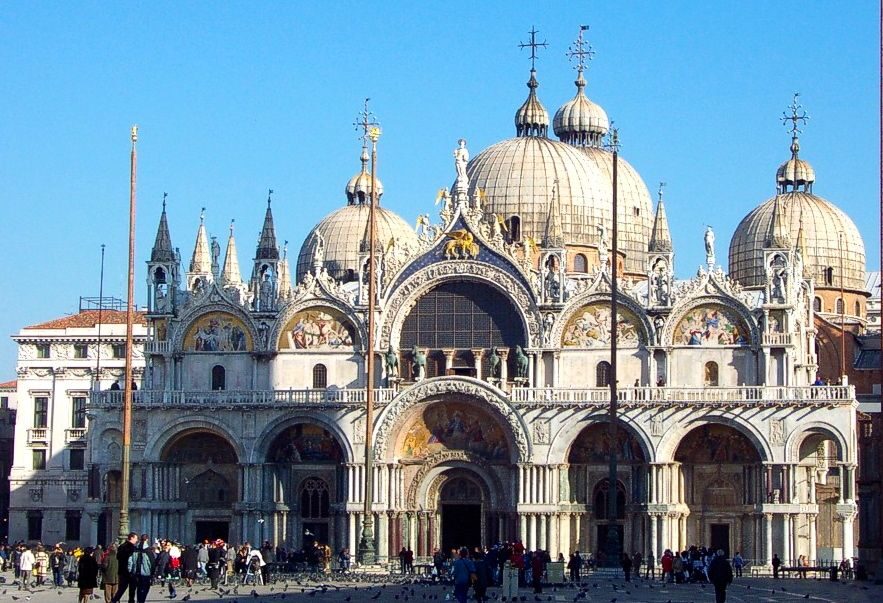
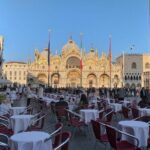
Piazza San Marco isn’t just a pretty backdrop. It’s the historic civic living room of the city, shaped to impress visitors and intimidate rivals, and your guide sets the context fast. You get a focused walk here—about 50 minutes—so you can place the bigger sites in your head before you go inside.
What makes this stop worth doing with a guide is the way details connect. Your guide points out how the square became the center of Venice’s identity, then ties that to what you’ll see next in the Doge’s Palace. The square is also where the landmarks you keep seeing in photos have real purpose.
You’ll also get a smart overview of several key structures around the piazza:
- the St. Mark’s Bell Tower and its story of being rebuilt after the 1902 collapse
- the Clock Tower on the north side, an early Renaissance presence that still feels practical and Venetian at the same time
- the Procuratie, three connected building blocks built under different phases—completed last under Napoleon’s occupation—and lined with arcades that defined the square’s edges
If you’re the type who wants to leave Venice knowing how things work, not just what they look like, Piazza San Marco is where this tour earns its keep.
One thing to plan for: St. Mark’s Square can feel like it has its own weather system—sun, wind, crowds. Bring water and expect a lot of foot traffic around you, even during the calmer parts of the day.
Other Doge's Palace + St Mark's Basilica combos we've reviewed in Venice


Doge’s Palace: Venetian power, architecture, and rules in stone
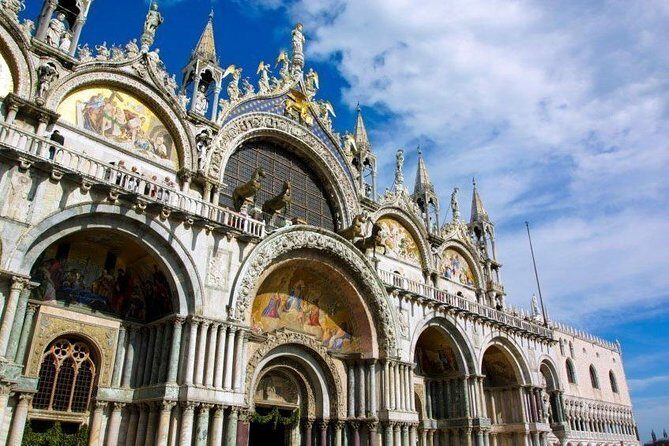
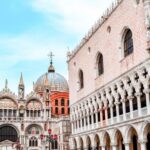
The Doge’s Palace is one of the best ways to understand Venice’s political rhythm without reading a textbook. It’s described for a reason as Venetian Gothic—all that pointed elegance and ornamentation—but your guide connects style to function. This wasn’t only where the Doge lived; it was the political and judicial heart of Venice.
Here’s what I like about tackling the palace on a guided route: you get a narrative. Your guide explains how the building carried authority and process—who had power, how decisions were made, and why the Republic needed a grand “stage” for governance. Even if you’ve seen pictures of the palace, it’s the layout and symbols that land better when someone walks you through them.
This stop also helps you appreciate Venice’s mix of appearances and realities. The palace looks like it belongs to a wealthy city-state with endless pageantry, but it also served as a working center for law and governance. That contrast is part of the point.
What you should watch for while you’re there
Try to slow down for the ornamental details, but keep your attention on how they connect to the palace’s role. If your guide mentions elements like the way sections feel “public-facing,” or how certain areas relate to official procedures, treat that as a clue—Venice loves disguising serious business in impressive form.
Also, manage expectations about time. In a 3-hour tour, you won’t get a museum-length wandering session across every room. Instead, you get a guided path through the core ideas, then you’ll be better oriented if you want to come back later on your own for deeper exploration.
St. Mark’s Bell Tower and Clock Tower: a short lesson in rebuilds and timing
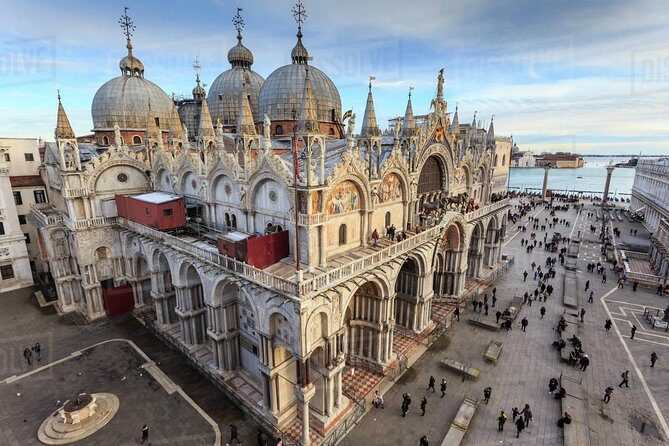
You may not think much about the bell tower until you’re standing near it. Then it hits you that it’s one of Venice’s most recognizable symbols for a reason. Your guide highlights how it was rebuilt after the 1902 collapse, turning a scary headline into a story about resilience and how Venice handled disaster.
That rebuild detail matters because it changes how you “read” the skyline. You’re not just seeing a pretty landmark; you’re seeing evidence of how the city maintained its identity after shocks. The tone of Venice is often: graceful on the outside, tough on the inside.
The tour also includes time around the Clock Tower, described as an early Renaissance building on the north side of Piazza San Marco. Think of this as your reminder that Venice wasn’t frozen in medieval time. Even in a city famous for tradition, new styles and practical structures arrived and stuck.
If you’re the kind of traveler who enjoys small facts that make a place click, this tower portion is a payoff. It’s quick, but it prevents the square from feeling like a random collection of icons.
Procuratie arcades: the square’s “edges” that run the show
The Procuratie are easy to overlook when you’re staring straight at the basilica and the palace. But once your guide frames them, they make the square feel more like a designed system than a showpiece.
These buildings are described as three connected structures on St Mark’s Square, linked to the Clock Tower. They’re known for their historic arcades—covered walkways that define movement around the piazza—and for being completed in stages, with the last connected section finished during Napoleon’s occupation.
Why this matters for you: the arcades explain the rhythm of the space. They’re where people pass, pause, and watch the square perform. Venice is built for walking, but it’s also built for coping with crowds and weather. These arcades help you understand how the city kept life moving even when the piazza got packed.
If you walk away with one mental image, make it this: the square isn’t only about buildings—it’s also about the human flow between them.

St. Mark’s Basilica: Italo-Byzantine mosaics and rules you must follow
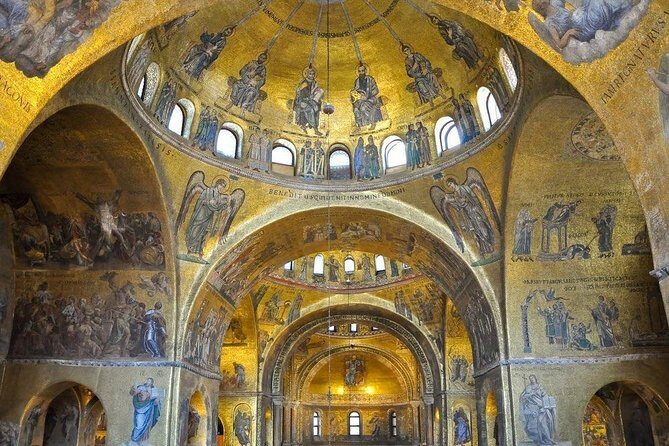
This is the big interior moment. St. Mark’s Basilica is sometimes called the Golden Basilica because of its precious mosaics, and your guide brings out what to notice so you don’t stare at the ceiling like it’s one endless blur. This stop runs about 40 minutes, with basilica admission included.
Your guide also frames the building in its original role: it served as the chapel of the Doge, head of the Republic of Venice. Architecturally, it’s described as one of the best-known examples of Italo-Byzantine style. That mix is key. It’s why the interior feels both ceremonial and oddly structured—like the whole place is built to deliver a message, not just decoration.
Dress code: the one thing you can’t wing
Plan to meet the basilica dress requirements. Shorts and sleeveless tops are not permitted. Both men and women must have knees and shoulders covered, or entry can be refused. This is not a “maybe they’ll let you slide” situation.
If you show up underdressed, you can waste your whole tour window on last-minute repairs. A light scarf for shoulders and a layer you can manage quickly is a simple insurance policy.
Sundays: a hard stop
Also note a big scheduling rule: admission is not permitted on Sundays. If your dates include Sunday, you’ll need a different plan for basilica time.
Pace, group size, and how the tour feels in real life
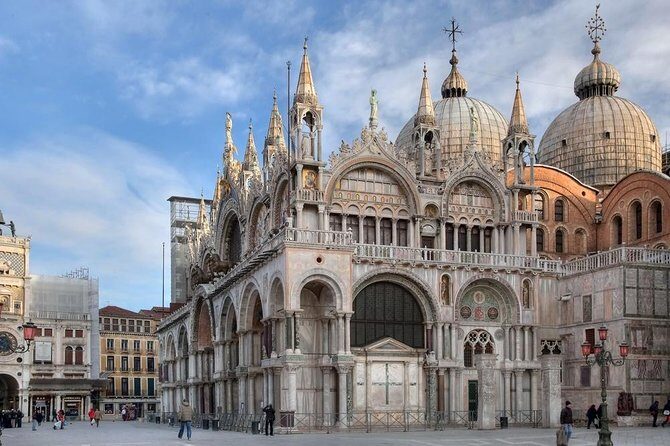
This tour is designed for people who want a high-impact overview without turning Venice into a full-day project. The duration is about 3 hours, and the group size is capped at 25 travelers. That matters because Piazza San Marco can swallow large groups, making it harder to hear your guide or keep track of where everyone should be.
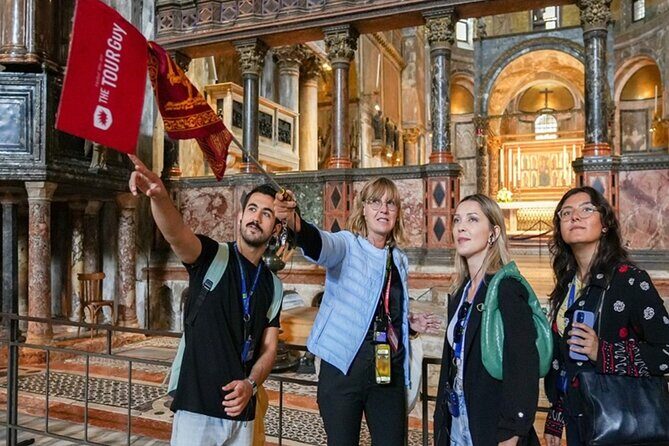
Headsets are included, which is a big deal in St. Mark’s area where the soundscape is constant. You’ll get the guide’s narration without playing guessing games when people around you get loud or when traffic shifts.
Timing-wise, the structure is straightforward:
- Piazza San Marco first (for orientation)
- architectural stops around the square (bell tower, clock tower, Procuratie)
- then the palace area and finally the basilica interior
The advantage is that you end with the most visually intense stop, so your brain is already warmed up on the city’s symbolism.
One practical note from how this area works: you’ll likely be arriving by water transport. The meeting point is in the San Marco Giardinetti / Riva degli Schiavoni area, so plan on using the vaporetto/water bus rather than expecting a simple walk in from everywhere.
Price value at about $117.11: what you’re really paying for
At $117.11 per person, this is not a budget tour. But it can still be good value if you’re buying three things together: guidance, included basilica admission, and time-saving efficiency during busy hours.
Here’s the trade-off I’d consider if I were booking today:
- You’re paying for a guided route that explains the meaning behind what you’re seeing, not just access to sites.
- You’re not paying separately for basilica admission, which reduces friction on the day.
- You’re buying focus in limited time. In a 3-hour window, a guide can help you avoid wandering and missing the best “story” points.
Where value can get shaky is when access becomes complicated on the specific date—Venice crowds and operational constraints can affect entry. That doesn’t mean the tour is automatically bad, but it does mean you should treat your basilica timing as important and keep your plans flexible if possible.
For me, the sweet spot is this: if you’re only doing one structured Venice sightseeing block, this tour gives you the big symbolic hits in a way that’s easier to remember later.
Who this tour fits best (and who should think twice)
This tour is a great match if you want:
- a focused overview of Venice’s political center and main church site
- an English guide with headsets so you can actually follow along
- a route that reduces decision fatigue in a crowded part of town
It’s also a good fit for first-timers who need orientation fast. Piazza San Marco plus the Doge’s Palace and St. Mark’s Basilica is the classic Venice triangle, and a guide helps connect the dots.
You might think twice if:
- you’re traveling on a Sunday (basilica admission is not permitted)
- you’re very sensitive to delays, or you can’t adjust plans if the day becomes operationally chaotic
- you’re hoping for a long, slow “museum pace” inside multiple sections. This is about the highlight path, not an all-day deep dive.
Should you book this Doge’s Palace & St. Mark’s Basilica tour?
I’d book it if you’re doing a first Venice visit and you want a clean, guided path through the city’s most important symbols. The headsets, the included basilica admission, and the way the guide connects exterior architecture to political meaning are exactly the kind of value that pays off in a short trip.
I’d pause and double-check details if your schedule includes Sunday or if you’re extremely dependent on everything going perfectly on the dot. Venice can be wonderfully magical, but it also runs on crowds, queues, and timing. If you can handle that reality, this is one of the stronger ways to make St. Mark’s area feel understandable instead of overwhelming.
FAQ
How long is the Doge’s Palace & St. Mark’s Basilica tour?
The tour runs about 3 hours (approx.).
Is the tour offered in English?
Yes, the tour is offered in English.
Is admission to St. Mark’s Basilica included?
Yes. St. Mark’s Basilica admission is included for the tour.
Are there any days when basilica admission isn’t allowed?
Yes. Admission is not permitted on Sundays.
What’s the dress code for entering St. Mark’s Basilica?
Shorts and sleeveless tops are not permitted. Both men and women must have knees and shoulders covered.
Where do I meet for the tour?
Meet at Alilaguna & Bucintoro Viaggi -Ticket Office San Marco Giardinetti, Riva degli Schiavoni, 30124 Venezia VE, Italy.
How many people are in the group?
The tour has a maximum of 25 travelers.
Are headsets provided?
Yes. Headsets are included so you can hear the guide clearly.
Can I bring a service animal?
Yes. Service animals are allowed.
Can I cancel and get a full refund?
You can cancel up to 3 days in advance for a full refund (you must cancel at least 3 full days before the experience start time).
Is there an access fee if I’m staying outside Venice for a day trip?
An access fee may be required on certain dates. For details, visit https://cda.ve.it.
If you want, tell me your travel dates (and whether it’s a Sunday) and I’ll help you decide morning vs afternoon based on how long you’ll likely want to linger in St. Mark’s area.